
Ane Graff, A Reality Made of Breach
OSL contemporary, Haxthausens gate 3, Oslo — 29 May – 8 August 2026
A rare hot day in a posh downtown district in Oslo center. A plain barn-like door hides behind a red room filled with objects from what appears to be a symbolic human gut. As you enter, heat is replaced by a pleasant, refreshing feeling, and as you proceed further, you are fully engulfed in the biome.
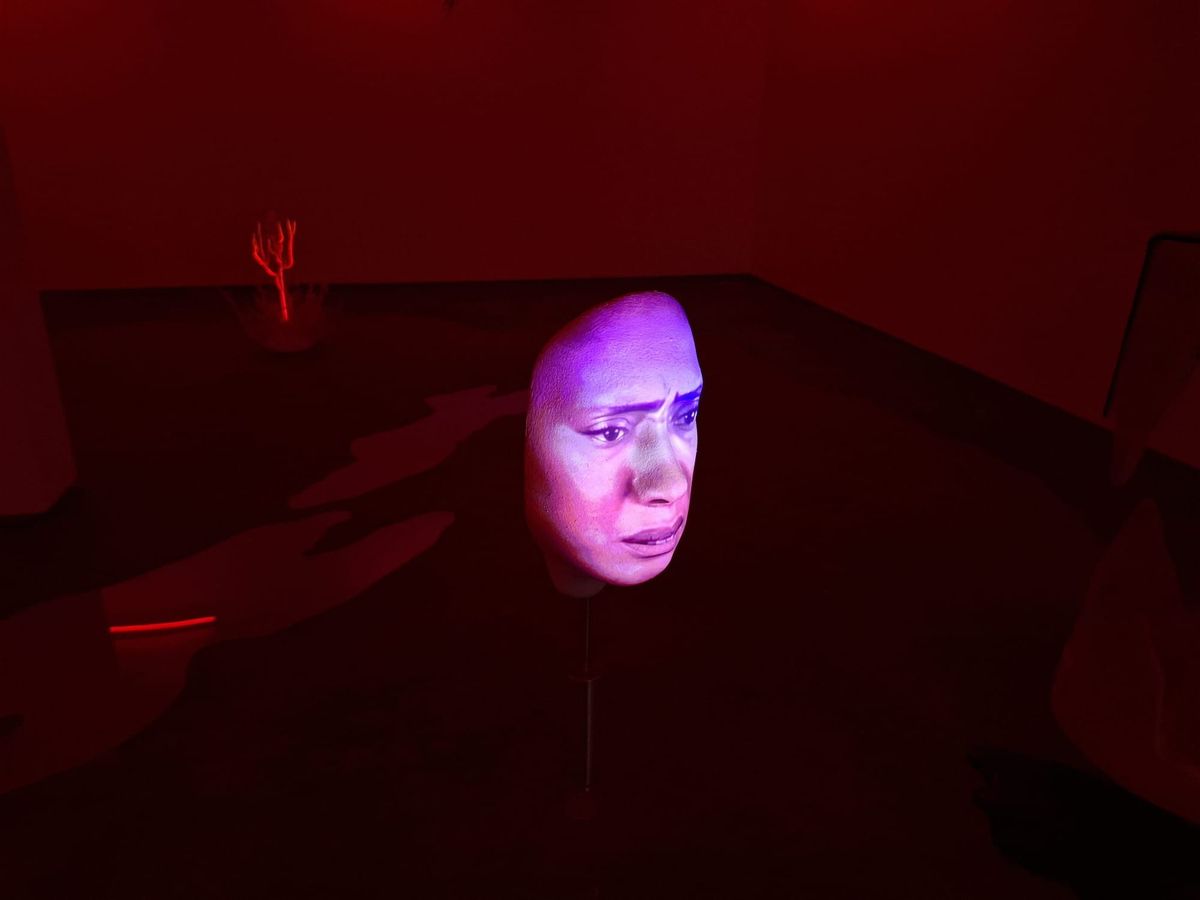
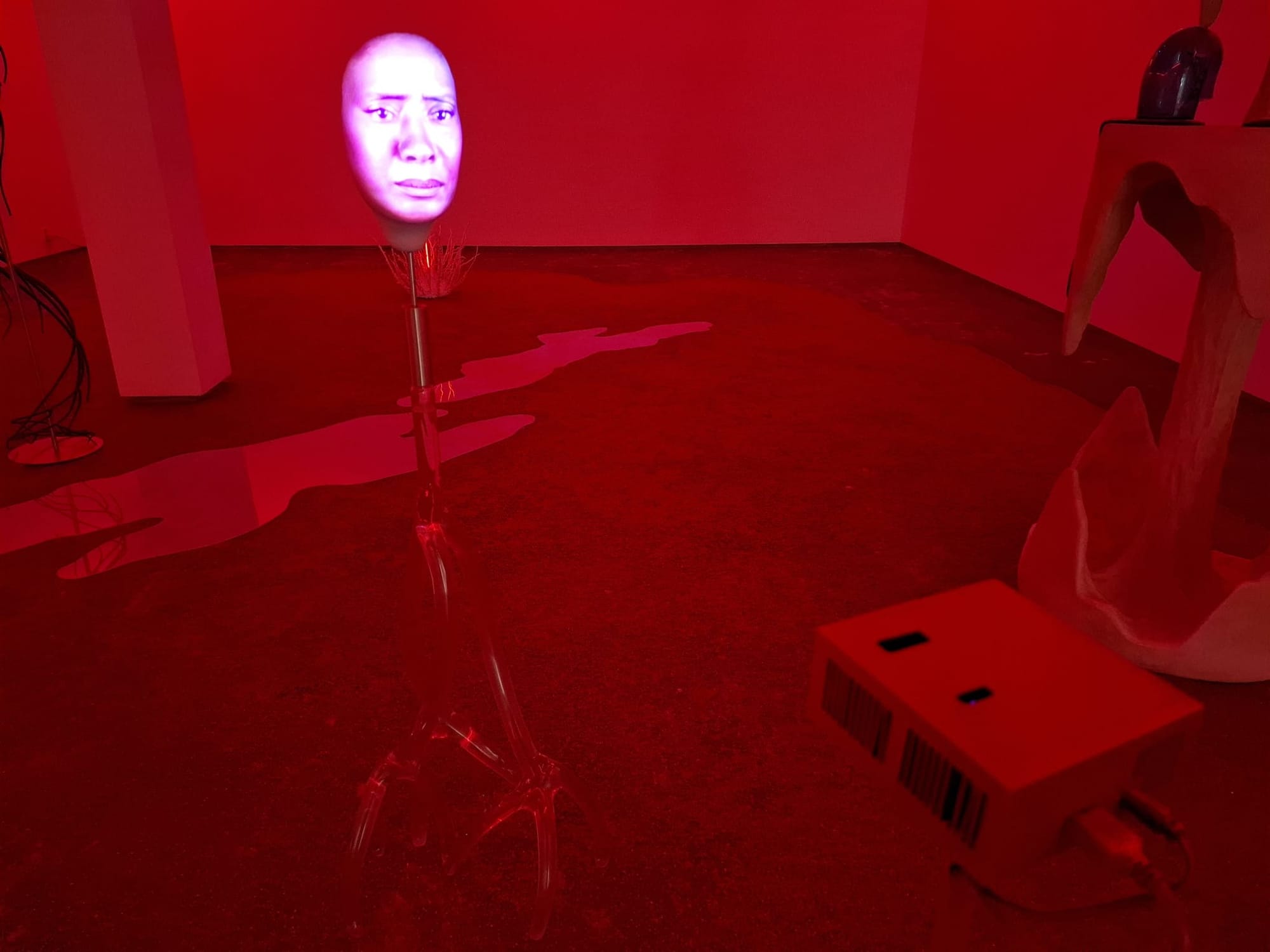
Initial uncanniness is replaced by an immediate interrogation – is the plastic goo 3d printed? Is it plastic at all? Is it cast in one piece? What is the technique behind it? Glass, metal, neon and ceramic forms that read as lungs, vessels, roots, neural systems, a head on a stand in the middle reciting prose.
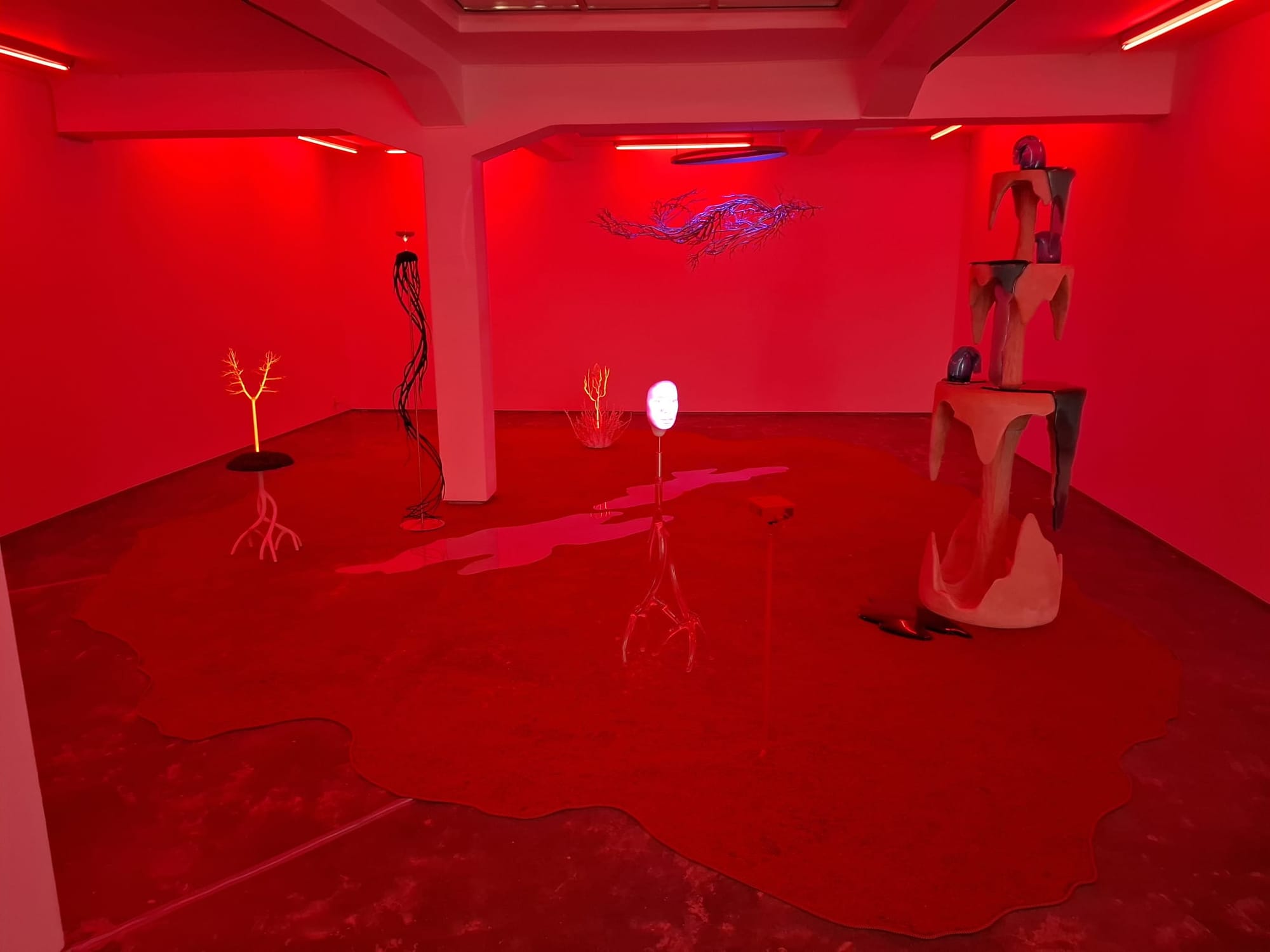
Resembles anatomy representations seen in school biology books. Quirky, even ironic. Reminds of all the scientifically wrong images artists have made in the service of representation — the solar systems hanging in schools and museums, where planetary distances are off by orders of magnitude because the truth would not fit in the room. Is this a gland? A liver? Is it a virus, and is it talking to me?
Graff works with scientists, and her sculptures habitually incorporate experimental materials: bacterial pigments, hair dye, meat glue, phytoestrogens, SSRI antidepressants. It is a celebration of texture, saturated colour and the shimmer of glass. He work The Goblets (Obsessive-Compulsive Disorder), 2022 — a chair with a glass on it. Nothing about looking at it tells you it contains:
lead, nickel, E102 Tartrazine, E172 black, red and yellow iron oxides, E180 Litholrubine BK, E123 Amaranth, E110 Sunset Yellow, E120 Carmine, E133 Brilliant Blue FCF from a Rimmel lipstick; polycyclic organic hydrocarbons, organophosphate flame retardants, phthalates, plasticisers, cadmium, arsenic, magnetite and silica dust collected from the Nordbytunnelen in Oslo; caffeine, sugar…
This is just a beginning. And to cap it all off, it’s all placed on epoxy resin cast of British colonial mahogany table, ca 1765. Graff's real subject is bodies as porous systems shaped by whatever has passed through them.
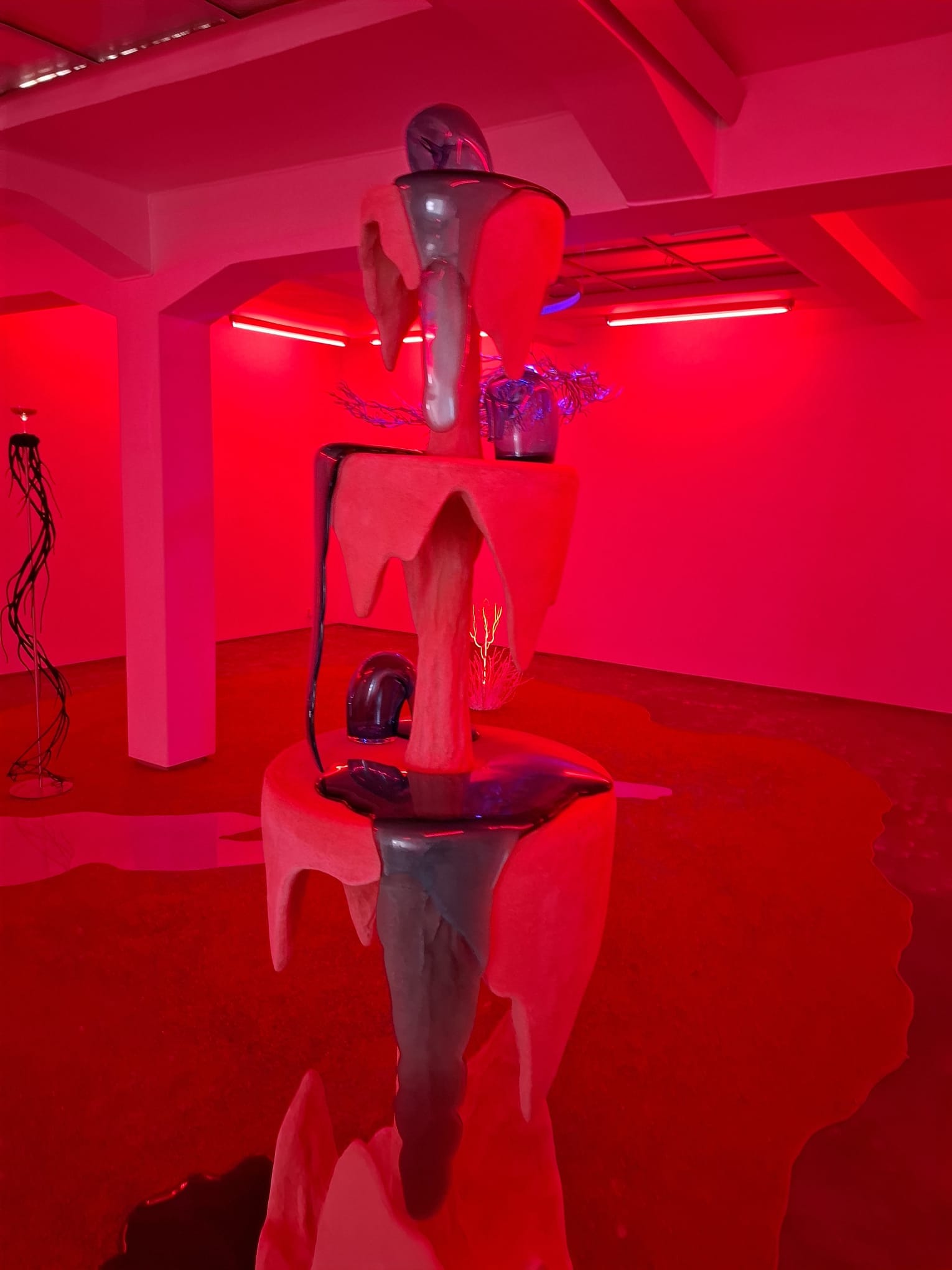
The glass is also used in this exhibition, but the red light absolutely does not do any justice to otherwise exquisite work in glass. Colours merge, making the glass actually look like plastic. But maybe that’s the whole point. The artist wants to show her work in another light intentionally.